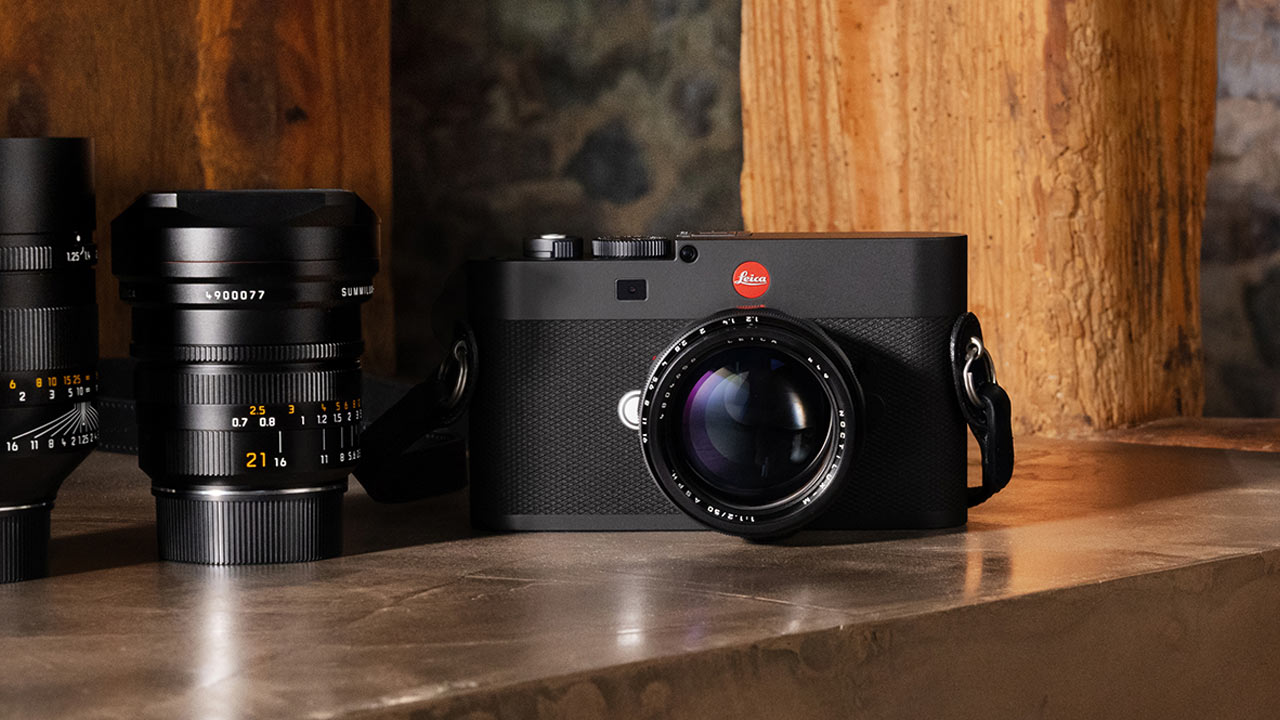
Why I Picked the Leica M-EV1 as My Portrait, Street and Fashion Camera
There’s a particular moment when you realise a camera has become your tool rather than an obstacle. You stop thinking about what it can do and start thinking about what it prevents you from doing. For me, that camera is the Leica M-EV1.
And the real reason I chose it has nothing to do with specs.
The problem with shooting too much
I had a Z7 and an a7RV. Both brilliant cameras. Both capable of shooting frame after frame with autofocus handling focus instantly, no matter how fast you pressed the button. I was running manual settings: manual aperture, manual shutter, manual ISO. But the autofocus was so frictionless that I could shoot without thinking about focus.
On a typical shoot, I’d walk away with around 1500 photos. Sometimes more.
That sounds impressive until you realise what’s actually happening: you’re not thinking about composition, you’re thinking about coverage. You’re not engaging with the moment; you’re outsourcing the actual photography to post-production. You’re shooting variations and hoping one of them works.
And then you spend three days sorting through 1500 images to find the 20 that actually work.
The problem wasn’t the cameras; they were technically excellent. The problem was that the workflow was too easy. Autofocus meant I didn’t have to think about focus. I could press the button, it would focus instantly, and I could move to the next variation without any friction.
The M-EV1 forced the issue
The M-EV1 has no autofocus. It has no continuous shooting mode. There’s no button you can hold down and hope. There’s no image stabilisation lying to you about whether you’ve actually nailed the exposure.
What it has is: manual focus, precise focus peaking, live exposure preview, and a workflow that requires you to make decisions before you press the shutter.
You compose. You focus. You check the exposure on the EVF. You shoot. That’s one photo. If you want another angle, you do it again. If you want a different exposure, you adjust and do it again.
That sounds like a limitation. It’s actually a feature.
On my last shoot, I took 200 photos across several hours. 200. Not because I was being conservative, but because I was thinking between shots instead of thinking in post-production.
I was paying attention to the light. I was noticing when it changed. I was adjusting my camera settings accordingly. I was composing deliberately instead of capturing variations on a theme.
And at the end, I didn’t have 1500 photos to sort through. I had 200 photos that were actually considered.
The compact size makes it part of the workflow
Yes, the M-EV1 is small. That matters, but not for the reason people think. It’s not about being unobtrusive, though that’s a benefit.
The size is part of the constraint. A smaller camera means you’re more likely to actually carry it without fatigue setting in. It means you’re more likely to stay present with the work rather than getting tired and phoning it in. But more importantly, a small camera that can’t spray and pray forces you to be deliberate.
You can’t hide behind volume with this camera. You can’t take 50 variations of a shot and hope one of them is sharp. You take one, you check it, you adjust, you take another. That’s the entire workflow.
Being all manual, the actual constraint that matters
Manual focus is the killer feature nobody talks about.
On the Z7 and a7RV, autofocus was so efficient that I could shoot without thinking about focus at all. I’d point, the camera would find focus, I’d shoot. That speed meant I could move fast, react fast, capture the spontaneous moment.
But it also meant I wasn’t thinking about focus. I wasn’t considering depth of field. I wasn’t making deliberate choices about what needed to be sharp and what could be soft. The camera was deciding, and I was just pressing the button.
The M-EV1’s manual focus with focus peaking means you have to make that decision yourself. You decide where the focus point is. You confirm it’s sharp before you shoot. That takes an extra second per shot. Maybe two seconds. Over a 12-hour shoot, that’s a lot of extra time.
But in that extra time, you’re thinking. You’re asking: “Do I want the eyes sharp or the whole face? Do I want to isolate with shallow depth of field or keep the background in context? Is this exposure right for what I’m seeing?”
Those decisions are photography. Everything else is just hoping the camera’s algorithm made the right choice.
LIGHT: The thing you understand more
Here’s what changed when I switched from 1500 photos to 200: I started actually looking more at the light.
On the Z7, I could shoot through a light change. The autofocus would adjust, the auto-ISO would compensate, and I’d get usable frames across a range of conditions. That’s technically impressive. It’s also photography on autopilot.
With the M-EV1, when the light changes, you notice. Your exposure preview shows you the image getting darker or lighter. Your manual controls mean you have to actively adjust. You can’t just keep shooting and expect the camera to handle it.
That forces engagement. You’re not just reacting to the moment; you’re also reacting to the light. You’re watching how a shadow falls. You’re noticing when direct light softens to diffuse. You’re adjusting your camera accordingly and checking the EVF to see the result in real time.
For portrait work, that’s everything. Light is literally the only thing that matters in a portrait. On the Z7, I was getting good light sometimes. On the M-EV1, I’m seeing the light and working with it deliberately.
For fashion photography, same thing. The way light falls on fabric, the way it catches on skin, the way it defines form. You notice all of that when you’re not spraying and praying.
For street photography, it’s different but equally important. You’re watching the light change across the scene, noticing pockets of interesting shadow, moving to catch the moment when light and subject align.
That’s not a technical feature of the camera. That’s a consequence of the workflow forcing you to slow down and pay attention.
The numbers tell the story
On a typical portrait shoot with the Z7 or a7RV, I’d end up with 1500 photos. Maybe 1200, maybe 2000. The work wasn’t in the shooting; it was in the sorting. Hours in Capture One narrowing down, comparing slightly different versions of the same shot, trying to find the one that was actually sharp or had the best expression.
With the M-EV1, I shot 200 photos on my last similar shoot. That’s not conservatism: I was shooting plenty, just not continuously. And at the end, I didn’t have 1500 decisions to make. I had 200 photos that were already considered.
Because I had to think before I pressed the shutter, the photos I did take were better. Not technically - same resolution either way. But compositionally, intentionally, in terms of what the photo is about, they were better.
That’s what the constraint does. It forces intention.
Why Sony Didn’t Work for Portraits
I should be clear: the a7RV is a phenomenal camera. For events, concerts, conferences (anywhere you need speed and reliability), it’s brilliant. The autofocus is nearly perfect. The dynamic range is excellent. It gets the job done.
But for portraits, I was always fighting it. Sony’s colour science requires work in post-production to get right. I’d shoot, get home, open Capture One, and spend time on colour balancing and tonal changes trying to get the files to look the way I wanted. And they’d never quite match what I saw in the camera viewfinder.
The Nikon Z7 was better for portraits, but I was still doing the same thing - balancing colour and tones to correct what the camera didn’t get quite right at capture.
With the M-EV1, it’s different. The files look exactly the same in Capture One as they do on the camera preview. I don’t edit: I balance light and colour. Exposure, contrast, crop. That’s it. The file is already there. The colour is already right. The tones are already correct.
I’m not correcting the camera; I’m finishing the image.
The Trade-Off
Yes, I’m slower now. If I need to capture spontaneous action, I’ll miss moments that the Z7 would catch automatically. Street photography is harder - I can’t react as quickly to a moment I didn’t anticipate.
But for the work I actually do (deliberate portrait sessions, editorial fashion shoots, street photography where there’s time to compose), the trade-off is entirely worth it.
I’m engaging with the work instead of delegating it to the camera’s algorithms. I’m thinking about light and composition and intention before I press the shutter instead of thinking about it in post-production.
The M-EV1 didn’t make me a better photographer. It forced me to photograph better.